Production Design Storytelling: How Character Worlds Are Built
Production design storytelling is one of the most powerful and least discussed crafts in cinema. Before an actor speaks a single line, before the camera moves, before the score plays, the world a character inhabits has already begun to tell us who they are.
Production design storytelling is one of the most powerful and least discussed crafts in cinema. Before an actor speaks a single line, before the camera moves, before the score plays, the world a character inhabits has already begun to tell us who they are. The objects on their shelves, the colour of their walls, the state of their kitchen, all of it communicates something. None of it is accidental.
Production design is often described as the art of creating the world of a film. That definition is accurate but incomplete. At its best, production design does not just create a world. It creates a world that is inseparable from the characters who live in it. The space reflects the person. The environment reveals psychology. The design carries meaning that dialogue never has to state.
Understanding production design storytelling is essential for any filmmaker serious about the craft. Whether you are directing, writing, or building a production from scratch, the way a space is designed will shape how audiences read every character who occupies it.
What Production Design Storytelling Actually Means
Production design storytelling is the practice of using the physical environment of a film, sets, locations, props, colour, texture, and space, to communicate character, theme, and emotion.
It is distinct from production design as pure logistics. A production designer working at the level of storytelling is not simply sourcing furniture and dressing a set. They are making deliberate choices about what every object, colour, and spatial arrangement says about the people who inhabit that space. Every decision is a narrative decision.
The key principle is this: space is character. A room does not just contain a person. It is an extension of them. It reflects their history, their psychology, their aspirations, and their contradictions. When production design is working at its highest level, you could remove every character from the film and still know something true about each of them just from the environments they occupy.
This is production design storytelling in practice. And it is one of the most underestimated tools available to any filmmaker.
The Visual Language of Character: Colour
Colour is one of the most immediate tools in production design storytelling. It operates on audiences below the level of conscious thought. Before a viewer has processed a single piece of dialogue or action, they have already absorbed the emotional temperature of the space through its palette.
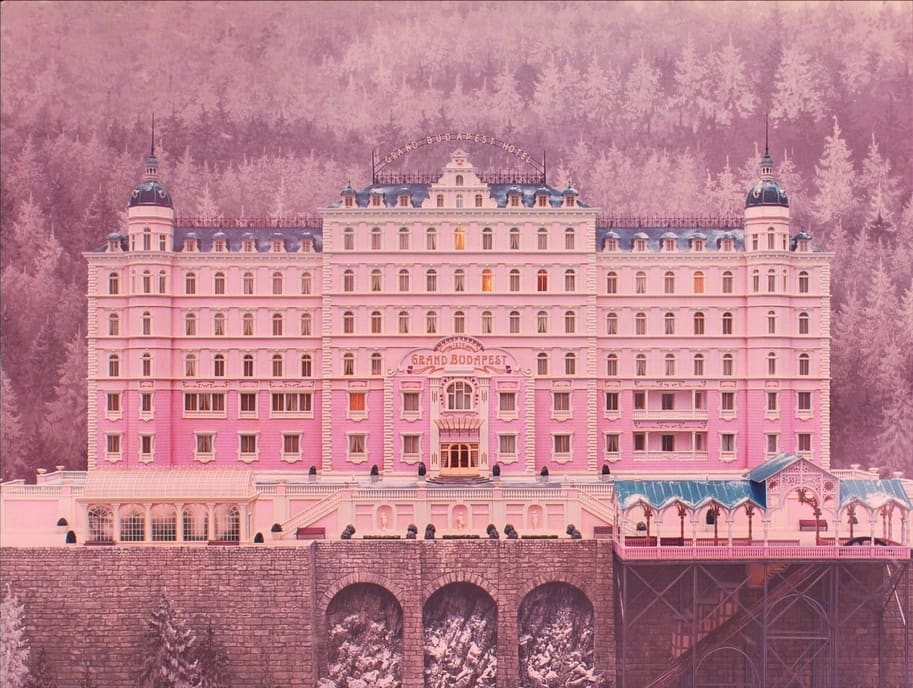
Wes Anderson's work is the most cited example, and for good reason. In The Grand Budapest Hotel, the shift between colour palettes across different time periods does not just signal era. It signals loss. The rich pinks and purples of the hotel in its prime give way to a desaturated, colder palette in the later sections, and that shift communicates the decay of a world more efficiently than any scene could alone.
However, colour in production design does not need to be this stylised to be effective. Consider the muted, washed-out interiors in Cathy Come Home, Ken Loach's 1966 British drama. The bleached, institutional tones of the spaces Cathy is forced to inhabit as her circumstances deteriorate are not simply realistic. They are expressive. They communicate her diminishing autonomy and the indifference of the systems around her.
Three ways colour functions in production design storytelling:
- Colour contrast between characters' spaces can signal social, emotional, or psychological difference without a word of dialogue
- Warm, saturated colours tend to signal safety, vitality, or excess, depending on context
- Cool, desaturated palettes often communicate isolation, institutional control, or emotional distance
Objects as Character History
If colour establishes emotional atmosphere, objects tell the backstory. In production design storytelling, every prop in a character's environment is a potential piece of narrative. The question a production designer asks is not "what would realistically be in this room?" but "what does this room tell us about the person who lives here?"
The objects a character surrounds themselves with reveal what they value, what they fear, what they are trying to hold onto, and what they are trying to forget. They are the physical residue of a life lived before the story began.
In Parasite, Bong Joon-ho and production designer Lee Ha-jun use the architecture and objects of the Park family home to communicate wealth as something sterile and curated. Everything is deliberate, expensive, and emotionally cold. Contrast this with the semi-basement of the Kim family, cramped and cluttered, with objects piled against each other out of necessity rather than choice. The objects in each space do not just reflect economic difference. They reflect two entirely different relationships to the world.
What to consider when using objects as narrative:
- What does this character keep, and why?
- What is conspicuously absent from their space that you might expect to find?
- What objects are worn, repaired, or out of place, and what does that say?
- What has the character displayed versus hidden?
The answers to those questions will tell you more about a character than most scenes will.
Space and Power: How Layout Communicates Relationship
Beyond colour and objects, the spatial arrangement of a set communicates power, intimacy, and psychological state in ways that are deeply felt by audiences even when they cannot articulate why.
High ceilings and wide spaces tend to make characters look small. This is not simply a matter of scale. It is a psychological effect. When a character moves through an environment that dwarfs them, the audience instinctively reads vulnerability or insignificance. Conversely, a character who commands a large space, who owns its proportions rather than being diminished by them, reads as powerful.
In There Will Be Blood, the vast, arid landscapes and the cavernous interiors Daniel Plainview inhabits are inseparable from his character. The scale is not just visual grandeur. It communicates his ambition, his isolation, and ultimately his emptiness. He needs enormous space because ordinary human-scale environments cannot contain his ego, but the enormity of his world also makes his loneliness total.
Intimate, compressed spaces work in the opposite direction. Consider Andrea Arnold's Fish Tank, shot largely in cramped flats and narrow corridors in an Essex estate. The tight, claustrophobic framing of the environments Mia moves through is not just realistic. It is expressive of her trapped circumstances and the limited choices available to her. The design makes you feel the constriction of her world before the story explains it.
The best production design storytelling means you could remove every character from the film and still know something true about each of them.
FILMD
The Character Who Has Not Arrived Yet: Designing for Backstory
One of the most sophisticated applications of production design storytelling is using the environment to communicate the history of a character before they appear on screen, or to reveal aspects of their inner life they would never voluntarily disclose.
This technique asks: what does this space tell us about who this person was, and who they are trying to be?
In Joker, the production design of Arthur Fleck's apartment is a detailed portrait of diminished circumstances and psychological fragility. The peeling walls, the sparse furniture, the institutional quality of the space, all of it communicates a life in which resources and hope have been slowly eroded. When we first see Arthur in that space, we already know something essential about him. The design has told us before he has.
Contrast this with the design of a character's aspirational space, one that reveals who they want to be rather than who they are. In The Talented Mr Ripley, Tom Ripley's obsessive acquisition of high-status objects and environments is itself a form of character revelation. The design of the spaces he moves through and covets tells us everything about his psychology: the yearning, the fraudulence, and the desperate desire to belong to a world he was not born into.
Questions to ask when designing for backstory:
- What does the state of the space, clean, cluttered, deteriorating, over-maintained, tell us about their psychological state?
- What would this character have kept from a previous life, and in what condition?
- What are they trying to project about themselves through their environment?
- Where does their aspirational self clash with their actual circumstances?
Texture, Material, and the Psychology of Surface
Colour and layout receive most of the critical attention in discussions of production design. However, texture and material are equally important tools in production design storytelling, and they operate on a deeply physical level.
Rough, worn, organic surfaces communicate struggle, authenticity, and history. Smooth, pristine, synthetic materials communicate wealth, control, and often emotional coldness. The material world a character inhabits tells us about their relationship to comfort, to effort, and to their own body.
In Normal People, the production design of the different spaces Connell and Marianne inhabit is a detailed study in class and self-presentation through material. Marianne's family home is large and well-appointed but curiously cold, full of hard surfaces and formal arrangements that communicate the emotional unavailability at the heart of her upbringing. Connell's home, smaller and materially simpler, is warmer in texture and feeling. The material difference is not just economic. It is emotional.
This level of detail rewards close attention. Furthermore, it is cumulative. Individual choices may register only subliminally. Together, they build a complete picture.
Continuity of Design: How Environments Change With Characters
One of the most elegant techniques in production design storytelling is using the evolution of an environment to track a character's arc. As characters change, their spaces change with them. Sometimes that change is imposed from outside. Sometimes the character makes choices that alter their environment in ways that reveal their psychological state.
In Breaking Bad, a television example worth examining for its production design rigour, Walter White's home undergoes a gradual transformation that mirrors his moral deterioration. The careful, clean, ordinary domestic space of the early episodes becomes increasingly disordered, compromised, and finally uninhabitable. The design tracks the character's arc without commentary.
Similarly, in Room, the single space of the film is both prison and home. What makes the production design extraordinary is the way it communicates two entirely different psychological realities simultaneously. For Ma, the room is a trauma environment. For Jack, who has known nothing else, it is the entire world. The design has to hold both truths at once, and the way objects are arranged, personalised, and used communicates the difference between survival and catastrophic limitation.
When designing for character arc, consider:
- How should this space look at the beginning of the story versus the end?
- What changes in the environment can track internal changes in the character?
- What remains constant, and what does that constancy communicate?
Space is character. A room does not just contain a person. It is an extension of them.
FILMD
Working With What You Have: Production Design on an Independent Budget
For independent filmmakers, the principles of production design storytelling apply just as fully as on a studio production. The difference is resource, not ambition. In fact, some of the most precise and expressive production design in British cinema has been achieved on very limited budgets, precisely because constraint forces clarity of intention.
When you cannot fill a space with expensive dressing, every object counts more. When you cannot build a set, the choice of location becomes a design decision in itself. The question shifts from "how do we create this world?" to "which specific, real-world space most honestly reflects this character's psychology?"
Andrea Arnold, Ken Loach, and Shane Meadows have all built bodies of work where the found environments their characters inhabit feel inseparable from who those characters are. That is not a result of limited ambition. It is the result of understanding that production design storytelling is about intention, not budget.e audience with nothing to hold onto. The story may have happened, but ultimately it did not mean anything.
Practical approaches for low-budget production design storytelling:
- Choose locations based on what they communicate about character, not just what is available
- Remove objects from a space before adding them. Subtraction is often more powerful than addition
- Use a consistent, considered colour palette across a character's environment even when working with existing spaces
- Brief your production designer or art department on the character's psychology, not just the practical requirements of the scene
- Consider what one or two key props could do the work of an entire dressed set
The Relationship Between Production Designer and Director
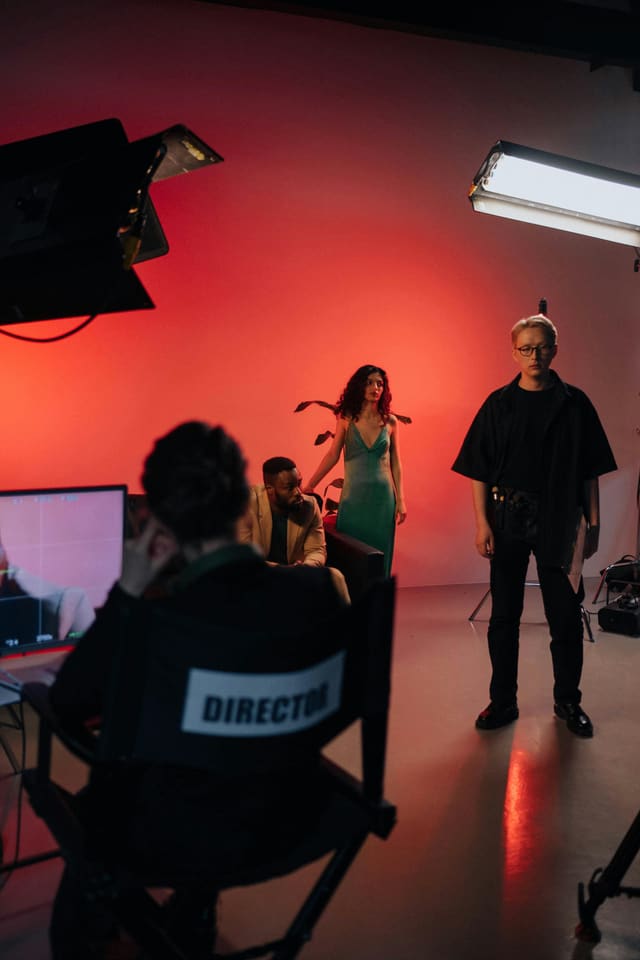
Production design storytelling requires genuine creative collaboration between the production designer and the director. The director brings the character psychology and the thematic vision. The production designer brings the expertise to translate that vision into physical space. When that collaboration works, the result is a film where the visual world and the human story are genuinely inseparable.
The most effective way to enable this collaboration is to share character work with your production designer early, before any decisions are made. Not just character descriptions or plot summaries, but genuine exploration of psychology.
- What does this character fear?
- What are they hiding?
- What do they want people to think of them?
- What is the gap between their self-image and their reality?
A production designer working from that level of character understanding will make choices you could not have anticipated, and those choices will enrich the film in ways that are impossible to achieve through direction alone.
The best production design storytelling is the result of a director who knows their characters deeply enough to brief a collaborator on their inner lives, and a production designer who has the skill and imagination to translate psychology into space.g her" or "I don't know why, but I understood him completely." The craft is invisible. The effect is not.
Final Thoughts on Production Design Storytelling
Production design storytelling is not decoration. It is not logistics. It is one of the primary ways a film communicates meaning, and it begins before the camera turns over and continues in the consciousness of the audience long after the credits roll.
The spaces characters inhabit are as much a part of who they are as the dialogue they speak or the choices they make. Consequently, every decision about colour, object, texture, and space is a narrative decision. It either adds to the audience's understanding of the character or it wastes an opportunity.
For filmmakers serious about the craft, production design storytelling deserves the same rigorous attention as screenplay structure, performance direction, or cinematography. The world of a film is not the backdrop to the story. In the best cinema, the world is the story.